
How Much Does Centering Affect a Card's Grade?
Centering is a key factor in trading card grades. Learn how centering impacts grading and what collectors should know before submitting cards.
How Much Does Centering Affect a Card's Grade?
When submitting trading cards for professional grading, collectors often wonder how much centering will impact the final grade. Centering refers to how well the image or design is positioned on the card relative to its borders. This subtle detail can make a significant difference in a card’s value and appeal. Here’s what collectors should know about centering and its effect on grading.
Understanding Card Centering
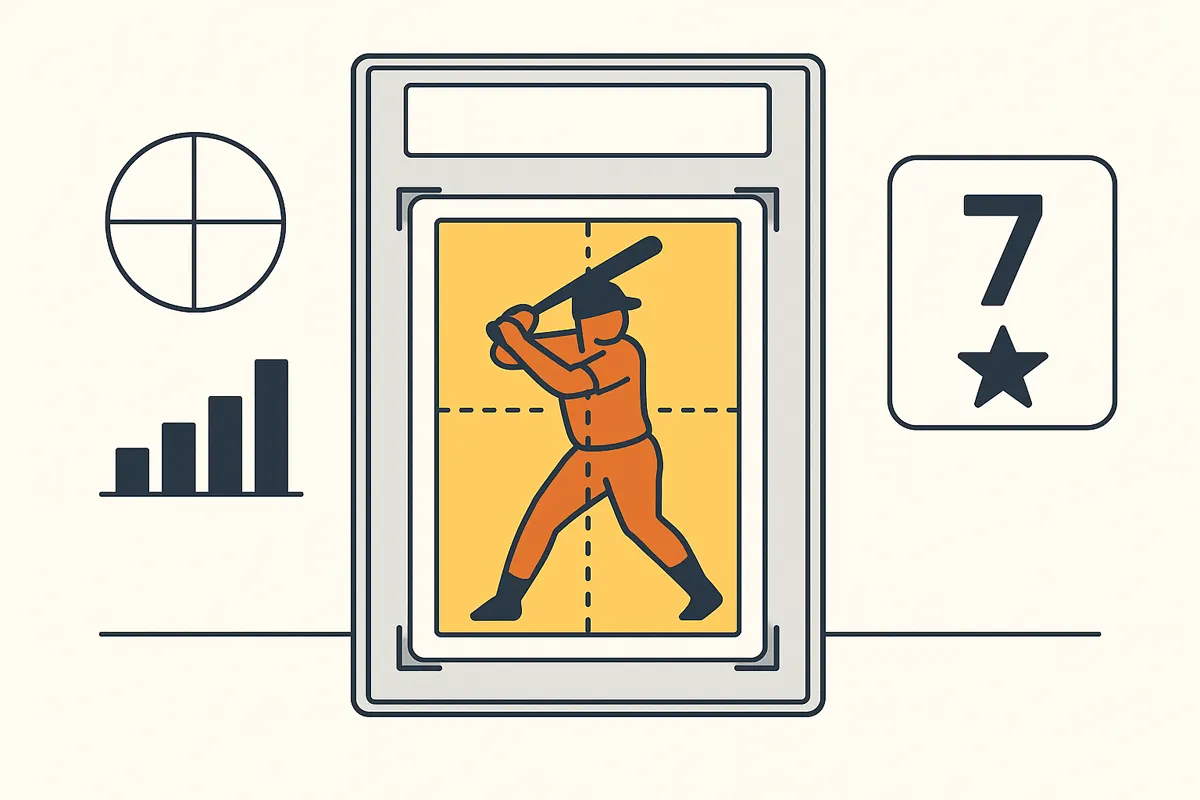
Centering measures the equal spacing of a card’s borders—the distance from the image to the card’s edge on each side. Perfect centering means the borders are uniform all around. Off-centering is when the image is noticeably shifted to one side, top, or bottom. Most grading companies, like PSA, BGS, and SGC, include centering as one of the primary subgrades or grading criteria.
- Front centering is more heavily weighted than back centering.
- Some card sets are notorious for poor centering due to printing processes.
- Centering is assessed using precise measurements, not just visual inspection.
How Graders Evaluate Centering
Card grading companies have published standards for centering. For example, to achieve a Gem Mint 10 grade with PSA, a card’s front centering must typically be within 55/45 or better (meaning the borders are no more than 55% on one side and 45% on the other), while the back can be slightly less precise, often 75/25. If centering falls outside these thresholds, the card’s maximum possible grade is capped, regardless of its other qualities.
Here’s how centering usually affects grades:
- Gem Mint (10): Nearly perfect centering, typically no worse than 55/45 front.
- Mint (9): Slightly more lenient, often up to 60/40 front centering.
- Near Mint (8): May allow up to 65/35 or even 70/30 centering, depending on the grader.
- Severely off-center cards are limited to lower grades, even if corners, edges, and surfaces are flawless.
This means centering can be the limiting factor for otherwise pristine cards. For vintage cards, where production quality was less consistent, graders sometimes make allowances, but the general standards remain the same.
Tips for Collectors: Checking Centering Before Submission
If you’re preparing to submit cards for grading, accurately assessing centering is crucial. Small differences can mean the difference between a high and an average grade. Tools like Midpoint can help by measuring centering precisely, allowing you to estimate the likely grade before submitting your card. This is especially useful for high-value cards where a single grade difference can impact value significantly.
- Use a centering tool or app to get objective measurements.
- Compare your card’s centering to grading company standards.
- Factor in both front and back centering, but prioritize the front.
In summary, centering is a core component of trading card grading, often acting as a ceiling on the highest possible grade your card can achieve. Careful measurement and understanding of grading standards can help you make informed decisions and maximize your card’s potential value.
Know the grade before you pay for it
Measure your card's exact centering and get an instant grade estimate from Midpoint — free to start.
Try Midpoint